4.9 STAR RATING BY 501 REVIEWS
 111 Camino Alto, Mill Valley, CA 94941
 (415) 383-2382
4.9 STAR RATING BY 501 REVIEWS
111 Camino Alto, Mill Valley, CA 94941(415) 383-2382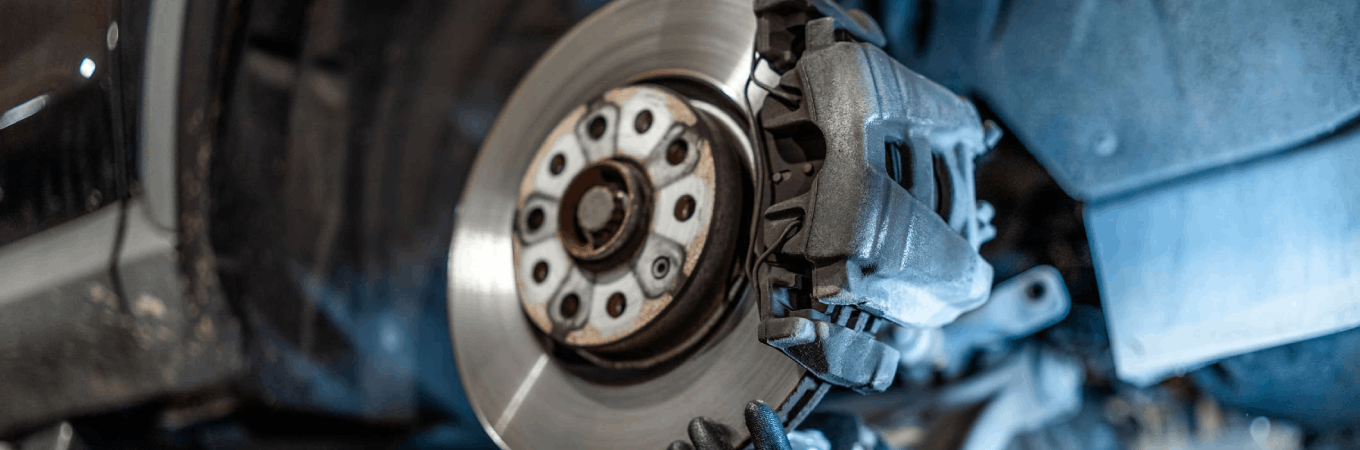
Land Rover brakes are not a standard brake job. The larger rotors, multi-piston fixed calipers, and electronic parking brake systems used on Range Rover, Range Rover Sport, Defender, and Discovery models require specific procedures and equipment that make standard brake service practices inadequate — and in some cases, damaging to the vehicle. At Master’s European & Japanese Auto Repair at 111 Camino Alto in Mill Valley, the shop performs Land Rover brake service with JLR-compatible software for EPB retraction, correct torque procedures for large-format caliper hardware, and manufacturer-specified brake fluid grades. The shop has been serving Land Rover owners throughout Marin County since 1976.
Brake pad wear intervals depend heavily on driving style, load, and terrain. Range Rover and Range Rover Sport owners who use their vehicles primarily on US-101 and Marin County roads will typically see front pad replacement between 30,000 and 50,000 miles. Defender and Discovery owners who tow regularly or use the vehicle off-road will see front pad wear between 20,000 and 35,000 miles — the added weight and downhill terrain engagement dramatically accelerate wear.
Brake fluid should be replaced every 2 years regardless of mileage on Land Rover vehicles. The brake fluid specification for current Land Rovers is DOT 4 — specifically a low-viscosity DOT 4 grade for vehicles with ABS and stability control. Marin County's Bay Area humidity means brake fluid absorbs atmospheric moisture faster than in dry climates. Moisture-contaminated brake fluid lowers the fluid's boiling point, which can cause brake fade under sustained use and accelerate internal corrosion in the brake master cylinder and calipers.
Brake judder is the most frequent Land Rover brake complaint. Judder — a pulsation through the steering wheel and brake pedal during braking — is almost always caused by disc thickness variation: the rotor has worn unevenly and is thicker at some points around its circumference than others. On Range Rover models with large-format rotors, judder develops faster when rotors are allowed to corrode between uses. Machining (resurfacing) the rotors removes the uneven surface if the remaining thickness is adequate; otherwise, replacement is required.
Brake caliper sticking is common on Land Rovers that are used infrequently or stored for long periods. The sliding hardware that allows the caliper to move laterally as pads wear can seize with corrosion, causing uneven pad wear — one pad wears significantly faster than the other on the same axle. In more severe cases, a seized caliper applies partial brake force continuously, causing the rotor to heat excessively and the tire to wear prematurely.
Correct Land Rover brake service requires more than pads and rotors. EPB retraction software, correct large-format caliper hardware torque, proper rotor installation procedure, and structured pad bed-in are all necessary for brake work that performs correctly and lasts its expected service life. Shortcuts in any of these areas produce the judder, noise, and premature wear that drive unnecessary repeat brake jobs.
Master’s European & Japanese backs all brake service with a 3-year/36,000-mile warranty. All work is performed by ASE-certified technicians with Land Rover-approved brake materials and JLR-compatible service software. For the full range of Land Rover services, see masterseuropeanjapanese.com/land-rover-repair-mill-valley/.
Symptoms include the parking brake warning light staying on after release, the parking brake failing to hold on inclines, grinding from the rear during parking brake application, or an error message in the instrument cluster. The EPB system has its own fault codes that require JLR diagnostic software to read. Master's European & Japanese can diagnose EPB faults and perform actuator retraction for pad replacement.
Yes — current Land Rover models specify a DOT 4 low-viscosity brake fluid compatible with the ABS and stability control systems. Using a standard DOT 3 fluid or the incorrect DOT 4 grade can cause brake system component corrosion over time. Master's European & Japanese uses Land Rover-specified fluid grades for all brake fluid services.
It depends on the warning. A yellow advisory light for pad wear means you have some distance before pads reach critical wear — schedule service soon but it's generally safe to drive locally. A red brake warning light — which can indicate low fluid, a pressure fault, or a hydraulic system issue — should prompt an immediate check before continued driving. Call (415) 383-2382 if you're uncertain about your specific warning.
Yes — the shop at 111 Camino Alto serves Land Rover owners throughout Marin County, including Sausalito, Corte Madera, Tiburon, and Larkspur. Call (415) 383-2382 or visit masterseuropeanjapanese.com to schedule.
